


Community in Context: Reflections on the 2026 NAGAP GEM Summit
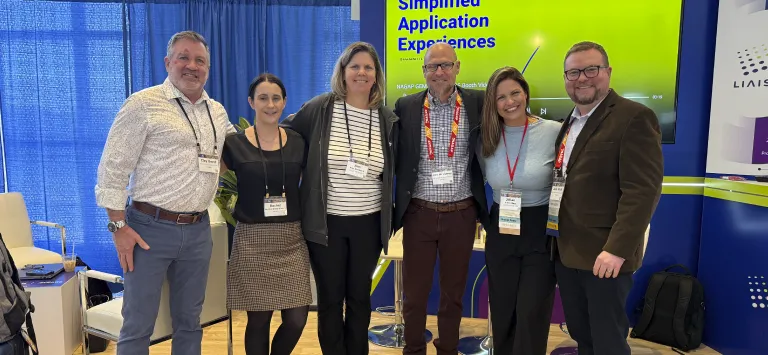
People compare approaches, share outcomes, and learn from one another. That has always been a strength of the NAGAP community.
There’s a passage from American philosopher Josiah Royce that has stayed with me over the years. Writing about what he called the “community of interpretation,” Royce described communities not as groups defined only by shared goals or proximity, but as collections of people committed to making sense of something together over time. A real community, in his view, gathers not only to act, but to interpret. It wrestles with ambiguity, tests assumptions, and refines its understanding through the presence of others engaged in the same work. That idea lingered with me throughout the 2026 NAGAP GEM Summit.
If you step back from the sessions, the schedule, and the steady movement between rooms, what begins to emerge is something more than a conference. It becomes a field coming together to interpret its moment. And it is a complicated moment.
Graduate enrollment management has never been simple, yet the current environment carries a different kind of weight. Policy and regulatory uncertainty continue to reshape institutional boundaries. International enrollment, which has long provided stability for many programs, has become less predictable, influenced by geopolitics, visa policy, and increasing competition abroad. Funding pressures affect both institutions and students, sharpening questions about cost, value, and return on investment. Competition has intensified as well, extending beyond institutions to include alternative pathways, credentials, and delivery models.
These conditions are not abstract: They shape daily work, influence how teams recruit, how they communicate, how they allocate resources, and how they think about the future.
What stood out at the 2026 GEM Summit, though, was not a sense of anxiety or retreat. The prevailing tone felt more grounded—there was a shared willingness to engage the complexity directly and to do so together.
Beyond Benchmarking
On paper, the GEM Summit resembles many professional conferences. There are more than 100 sessions covering recruitment, operations, strategy, and technology. Presentations address digital marketing, enrollment modeling, CRM strategy, and the application of AI in admissions. The program includes case studies, panels, and workshops led by practitioners and partners from across the field. All of this is valuable, and all of it contributes to the experience, but what distinguishes the Summit is the way these pieces connect.
Benchmarking remains part of the value. People compare approaches, share outcomes, and learn from one another’s successes and setbacks. That has always been a strength of the NAGAP community.
The orientation of those conversations has begun to shift. Rather than focusing primarily on identifying best practices within a stable environment, many discussions now center on how to operate effectively when the environment itself is changing.
Sessions on recruitment continue to draw strong interest. After all, generating demand—especially in a complex market—remains essential. At the same time, there is growing attention to what happens after that initial point of contact. Questions about responsiveness, application friction, system design, and behavioral signals are becoming more central. These conversations reflect a deeper interest in how institutions convert interest into enrollment and how they support that process along the way.
Operational design has also taken on a more prominent role. Conversations about workflow, staffing, and system integration now take place alongside discussions of strategy. The way work is structured and executed is increasingly understood as a factor in overall performance.
Technology is woven into these discussions in a practical way. AI and data analytics appear in sessions focused on communication strategy, decision-making, and student engagement. The tone is measured. Participants are exploring how these tools can be applied thoughtfully and how they can support institutional goals.
Taken together, these conversations create a different kind of dialogue. There is less emphasis on finding a single correct approach and more focus on building a shared understanding of a complex system.
Charting a Course
Returning to Royce, a community is defined by its willingness to engage in interpretation together. It is shaped by a shared commitment to understanding, even when certainty is limited. That idea captures much of what the GEM Summit represented this year.
There was camaraderie, expressed in moments of recognition and shared experience. There was pragmatism, visible in conversations focused on what can be done within real constraints. There was also a sense of collective effort, grounded in the understanding that the path forward is still unfolding. This has practical implications for how we approach our work.
The tone and content of conversations and presentations alike reinforced the importance of understanding applicant behavior and responding to it effectively. It highlights the role of operational clarity and system alignment in achieving enrollment outcomes. It underscores the value of data as a tool for informed decision-making. It also points to the importance of thoughtful partnerships that contribute perspective alongside capability.
These themes have been present in the field for some time. What feels different is the degree to which they are now shared and widely understood.
Graduate enrollment management continues to evolve in response to a complex set of pressures. The environment is demanding, and the challenges are real.
What the 2026 NAGAP GEM Summit demonstrated is the presence of a community committed to working through those challenges together. The work is not limited to identifying solutions. It also involves making sense of the environment, refining understanding, and supporting one another in the process.
In that sense, the Summit reflects more than the current state of the field. It reflects its capacity to respond with clarity, collaboration, and a sustained commitment to understanding what comes next.